Is Your Engine Overdue for a Wash? Signs It's Time for a Deep Clean
-
Engine grime traps heat, restricts airflow, and accelerates corrosion, causing components to wear out faster.
Warning signs include heavy grease buildup, rust, difficult starting, reduced fuel economy, and higher operating temperatures.
Professional engine cleaning protects sensitive electronics while safely removing baked-on oil, sludge, and carbon deposits.
DIY pressure washing can damage sensors, connectors, seals, and other critical engine components.
Quarterly or semiannual engine cleaning can improve performance, reduce downtime, and extend the life of your truck.
Your truck's engine is the heart of your operation. It keeps you moving, delivers your cargo, and represents a serious investment in your livelihood. But here's the thing — most drivers and fleet managers completely overlook one of the simplest, most effective maintenance routines that'll keep that engine running strong for years to come: professional engine cleaning.
Over time, your engine accumulates layers of grease, oil, sludge, and environmental grime that don't just look bad — they actively work against your truck's performance and longevity. The question isn't really whether your engine needs cleaning; it's whether you'll recognize the warning signs before real damage occurs. Let's talk about what happens under the hood and why keeping your engine clean matters more than you might think.
Understanding Engine Grime Buildup and Its Impact
When your truck's engine runs, it's a complex balance of combustion, lubrication, and cooling. But that process also generates byproducts: burnt oil residue, carbon deposits, dust particles, and moisture that all conspire to create a grimy coating on your engine's surfaces. Add road spray, diesel fumes, and weather exposure, and you've got the perfect recipe for a contaminated engine bay.
Here's what concerns us: that buildup isn't just cosmetic. It traps heat, restricts airflow, and creates an environment where corrosion thrives. Over months and years, engines caked with grime run hotter, less efficiently, and with far greater strain on every component. Belts deteriorate faster. Hoses crack. Electrical connections corrode. What started as preventable accumulation becomes an expensive repair nightmare.
Fleet managers especially need to understand this. One truck running hot because of engine grime doesn't just cost you fuel efficiency — it costs you downtime, emergency repairs, and potentially missed deliveries. Scale that across multiple vehicles, and you're looking at significant preventable losses.
The Performance and Safety Connection
A clean engine isn't just about pride in appearance. It's about making sure your truck operates at peak performance, and honestly, it's about safety too. When your engine struggles against layers of grime and carbon buildup, several things happen.
Your fuel economy drops. Your engine works harder to maintain the same power output, burning more diesel to get the job done. Over a year, that inefficiency adds up fast. Your cooling system also becomes less effective — grime acts like insulation in all the wrong ways, preventing heat from dissipating properly and forcing your engine to run hotter.
Your engine's electrical systems become unreliable. Corroded terminals and dirty connections can cause starting problems, warning light issues, and sensor failures that leave you stranded or unable to diagnose real problems. And here's the safety angle: an engine running inefficiently and hot is an engine more likely to stall at critical moments or fail when you need it most.
Visual Warning Signs Your Engine Needs Cleaning
So how do you know when it's time to call in the professionals? Start by actually looking at your engine. Pop that hood and be honest about what you see.
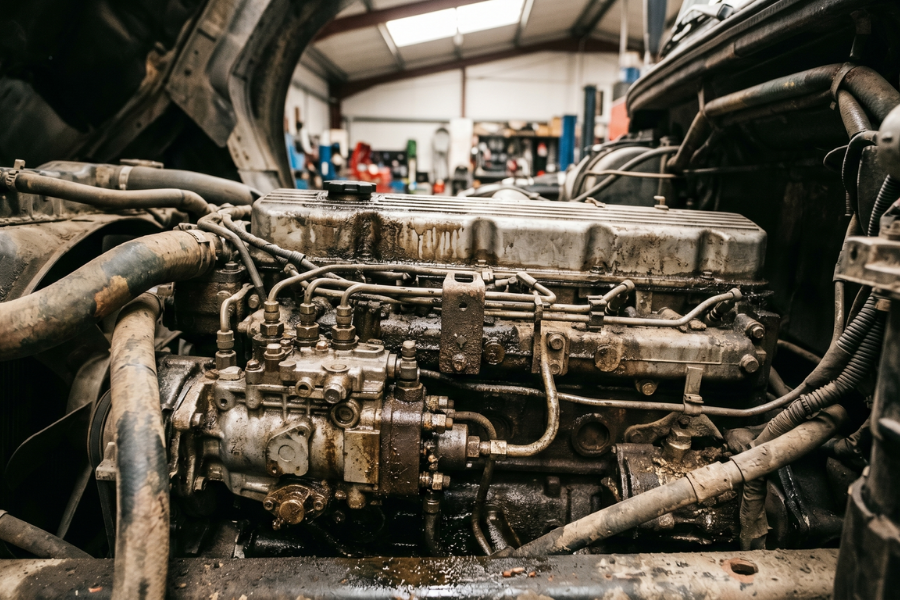
Heavy grease or oil buildup is the most obvious sign. If you can't see the metal underneath, or if there's a thick, sticky coating on your engine block, valve covers, or belts, you're overdue. That's not just dirt — that's accumulated residue actively working against your truck.
Discoloration or darkening of engine surfaces tells a story too. Engines should have some sheen from proper lubrication, but if they look black, gummy, or heavily stained, grime has settled in for the long haul.
Visible rust or corrosion, especially around bolts, clamps, and electrical connections, means moisture has been trapped under all that grime, eating away at metal. This is a red flag that shouldn't be ignored.
Crusty or flaking deposits around hoses, belts, or seams indicate that oil and sludge are literally hardening on your engine components. Once it reaches that stage, the situation calls for professional degreasing — not just a rinse.
Functional Warning Signs It's Time
Beyond what your eyes can see, your truck itself will give you hints that engine wash service is overdue.
Your engine might be harder to start, especially on cold Idaho mornings. That extra grime on starter components and electrical connections creates resistance where there shouldn't be any. You might also notice increased fuel consumption without any other explanation — a grimy engine has to work harder for the same results, plain and simple.
If your temperature gauge is running consistently warmer than it used to, or if you're experiencing overheating issues, a restricted cooling system thanks to engine grime could be the culprit. Check engine lights can sometimes stem from sensor errors caused by corroded connections covered in grease and oil. Cleaning the engine and its electrical systems occasionally resolves warning codes you'd otherwise need expensive diagnostics to understand.
The Risks of Ignoring Engine Grime
Let's be direct: neglecting your engine's cleanliness isn't a money-saving strategy. It's the opposite.
Allowing grime to accumulate accelerates the deterioration of every component in your engine bay. Seals dry out faster. Bearings wear unevenly. Hoses become brittle. What should've been a routine service becomes a major repair or complete engine overhaul — an expense that dwarfs the cost of regular professional cleaning many times over.
That's not even counting the lost revenue while your truck is out of commission, or the impact on your reputation if you miss deadlines because of preventable engine failure. Grimed-up engines also run hotter, which shortens oil life and forces more frequent oil changes just to maintain basic protection.
There's also an environmental angle. Engines that aren't well-maintained don't burn fuel efficiently, which means more emissions and a bigger environmental footprint. As fleet operators, that's becoming an increasingly relevant concern.
What Professional Engine Cleaning Actually Involves
This is where The Truck Wash comes in. Our professional degreasing services aren't just about spraying your engine with soap and water. Real engine cleaning is a methodical process that requires knowledge, the right equipment, and careful protective measures.
It starts with inspection. We evaluate your engine's condition, identify areas of heavy buildup, and note any existing damage or concerns. This matters because you don't want anyone aggressively spraying into electrical connections or sensor housings.
Next comes the degreaser application. We use industrial-grade degreasers specifically formulated to break down baked-on oil, grease, and carbon without damaging paint, rubber seals, or electrical components. These products actually penetrate the grime rather than just pushing it around.
Then comes careful, controlled rinsing. We remove the loosened grime with precision, protecting sensitive areas while ensuring thorough cleaning. A proper engine wash process uses controlled pressure settings — high enough to remove grime, calibrated to prevent damage.
Finally, we inspect again, dry the engine, and often apply protective coatings to prevent future corrosion and grime adhesion. A quality degreasing job isn't quick, but it's thorough — and that thoroughness is exactly what your engine needs.
Why DIY Engine Cleaning Creates More Problems Than It Solves
We understand the temptation to spray down your engine bay with a pressure washer and call it a day. But here's why that approach almost always backfires.
High-pressure water and electronics don't mix. Your truck's engine is filled with sensitive electrical components, sensors, and connectors. One wrong spray and you've shorted something out — creating a much larger problem than the grime you were trying to remove. Or worse, you've damaged something you don't realize until your truck won't start or throws mysterious warning codes miles down the road.
Consumer-grade degreasers also don't have the cleaning power of industrial products. You'll move surface grime around, maybe remove some of it, but years of baked-on buildup won't respond meaningfully. You spend hours and get mediocre results.
There's also the chemical safety angle. Degreasers are harsh substances. Without proper ventilation and protective equipment, you're exposing yourself to respiratory irritants and skin contact risks. Industrial cleaning requires knowledge of proper handling and application — knowledge our team brings to every job.
Professional Engine Cleaning as Part of Fleet Maintenance
If you're managing a fleet, routine engine cleaning should be part of your standard maintenance rotation — not something you only do when a problem shows up.
Think about it this way: you don't wait until your truck breaks down to change the oil. Engine wash services should follow the same logic. Regular professional cleaning prevents the accumulation that leads to failures. It's preventive maintenance, and prevention is always cheaper than repair.
We recommend incorporating engine washing into your fleet's quarterly or semi-annual maintenance schedule, depending on operating conditions. Trucks working in particularly dusty or oily environments may benefit from more frequent cleaning. Pairing engine washing with our truck & trailer washing and our truck detailing services creates a comprehensive maintenance approach that covers your entire operation inside and out.
Fleet managers who've made engine cleaning routine report noticeably improved fuel economy, fewer maintenance-related downtime incidents, and engines that simply run better. That's the direct result of keeping a critical component actually clean.
Don't overlook driver comfort either. After their rig gets a thorough service, drivers appreciate unwinding in our our lounge before heading back out. Chippewa air fresheners and Bullsnot truck care products round out a full care routine that keeps both the truck and the driver in top shape.
Ready to Give Your Engine the Care It Deserves?
Your truck's engine doesn't ask for much. It just wants to do what it was built to do — without layers of grime working against it at every turn.
If you're recognizing any of the signs we've discussed — visible buildup, harder starting, hotter running, or just a gut feeling that your engine's been neglected — it's time to reach out. Our team at The Truck Wash understands the demands on truck drivers and fleet operators in Idaho Falls. We've got the expertise, equipment, and commitment to keep your engine running clean and strong, visit after visit.
Whether you need a one-time deep clean or you're ready to build engine washing into your regular maintenance plan, we're here to help. Explore everything we offer at The Truck Wash and see how our professional degreasing services and engine wash can extend your truck's life and improve its performance. Don't wait until grime becomes a problem — a clean engine keeps you moving, and that's what we're here to make happen.
Related Questions
How often should we have our truck engine professionally cleaned?
For most operations, semi-annual or quarterly engine cleaning works well, depending on driving conditions. Trucks operating in dusty or industrial environments may benefit from more frequent service. Our team will recommend a schedule based on your specific routes and usage.
Can I spot-clean my engine myself between professional services?
Minor exterior surface cleaning is generally okay, but professional-grade degreasing requires industrial equipment and products to avoid damaging electrical components or allowing water intrusion. Professional cleaning protects your investment in ways DIY approaches simply can't match.
How long does a professional engine wash take?
A thorough engine cleaning typically takes one to three hours, depending on the level of buildup and engine complexity. We work efficiently without compromising quality, and our 24/7 washout service availability means you can schedule around your operation's demands.
What's the difference between a regular truck wash and professional engine degreasing?
A regular wash removes surface dirt and dust from the exterior. Professional degreasing uses industrial-grade products and controlled techniques to break down baked-on oil, grease, and carbon deep within the engine bay — areas that standard washing never reaches and that matter most for long-term performance.